I. One pitch, whole business model
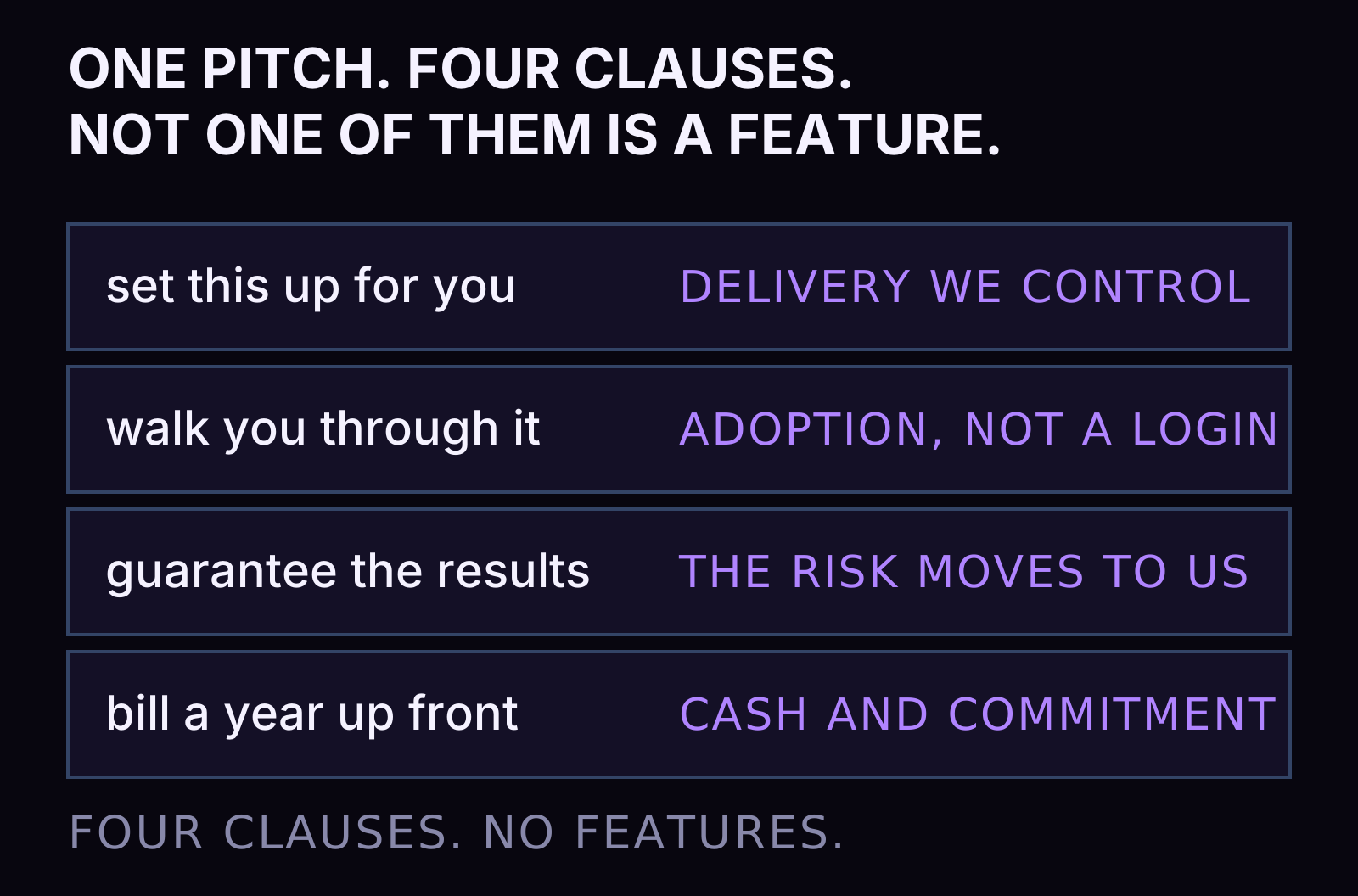
Alex Becker has a video on bootstrapping SaaS companies. Most of it is standard operator talk. Then he recites the pitch he used to sell Hyros in the early days, and the pitch is the entire business model in four sentences. Paraphrasing his own telling: if our team is going to set this up for you, walk you through it, guarantee the results, and make sure it works, we bill a year up front so we can cover the cost and know you're committed. Does that sound fair? If it doesn't work, you get all the money back. Or take the free offer, we prove it works first, and you start paying once it's growing your ads.
Read it again slowly. There's no discount. There's no trial tier. There are two doors and both of them are good for the seller and fair to the buyer. Door one: full commitment, full risk reversal, cash up front. Door two: zero commitment, small proven result, then the bill starts. Every serious offer I've ever respected reduces to one of those two doors.

Two doors: pay a year up front with a full refund if it fails, or take the free result first. Both are the same guarantee wearing different clothes.
That pitch is the anchor for this piece. I'm going to walk through how Becker arrived at it, because the route matters more than the destination. He didn't start there. He spent 15 years mutating his model era by era, and each mutation is a GTM lesson you can lift directly. Then I'm going to lay out my own framework, the one I'm building the next decade on. I call it the Value Optimization Framework. Becker's arc is the external proof that its mechanics work. The framework itself goes further than he does, and I'll show you exactly where and why.
II. Becker over time: four eras, four upgrades
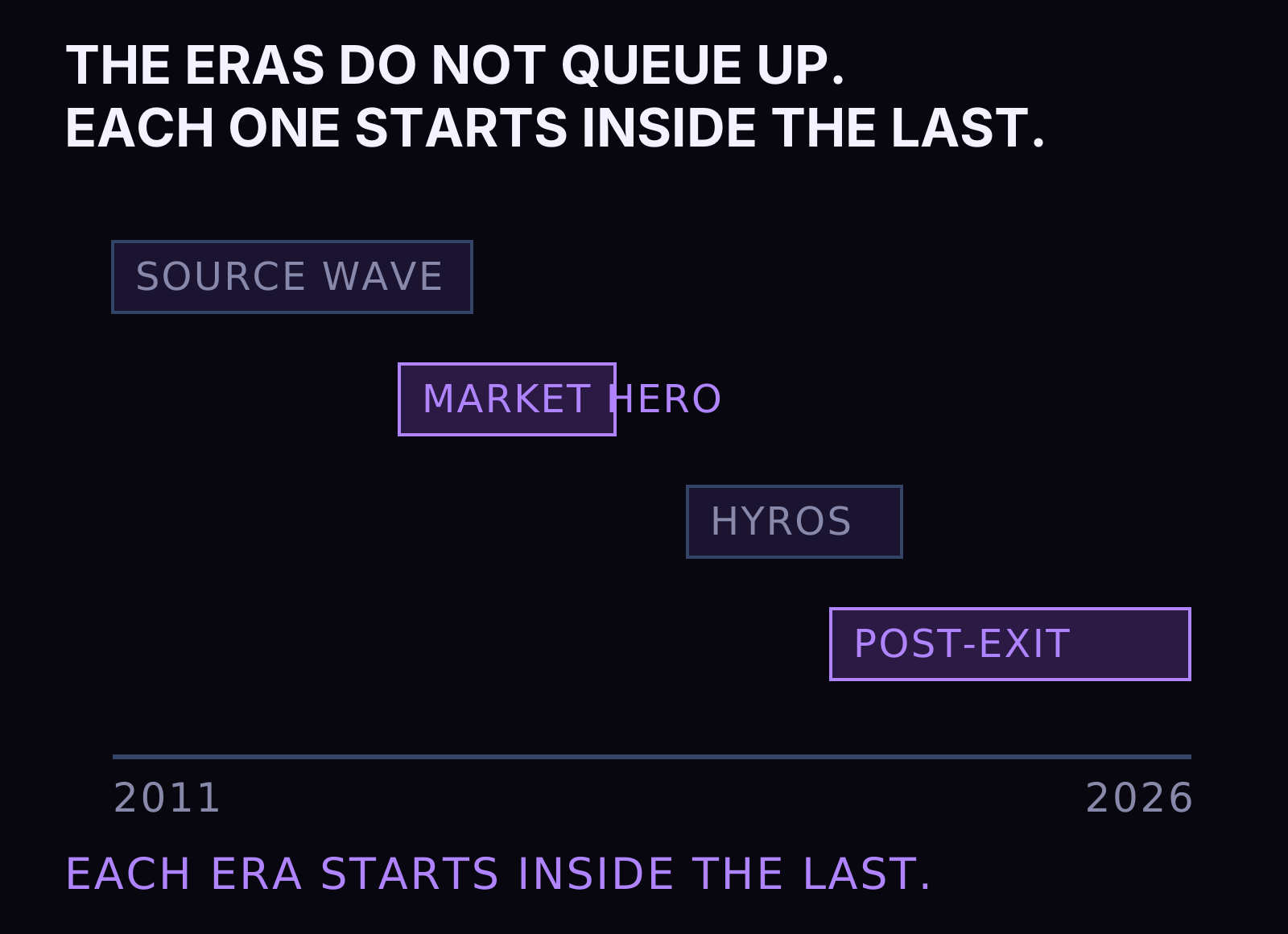
The interesting thing about Becker is the derivative, the rate of change between eras rather than any single company. Watch what changed era to era and you get a map of GTM maturity that most founders never draw for themselves.
Era one: sell skills to beginners
After leaving the Air Force around 2011, Becker did freelance SEO for local businesses, then built Source Wave: SEO courses, SEO software, SEO services, all sold to internet marketers. Secondary reporting puts Source Wave north of $4 million a year at its peak. Distribution was organic: YouTube education, email lists, launches. The buyer was broad and price-sensitive. In his own later telling, he was doing ten things at once, and all of them priced his time instead of a result.
Era two: sell infrastructure to marketers
Around 2015 he launched Market Hero, an email marketing and analytics SaaS, sold mostly to the audience the info era had built. The upgrade here is subtle but structural: he stopped selling the skill and started selling the machine the skill runs on. Subscription revenue replaced launch revenue. The customer feedback from Market Hero surfaced a bigger problem than email: nobody running serious ad spend could accurately attribute revenue back to their ads.
Era three: sell guaranteed outcomes to businesses with money
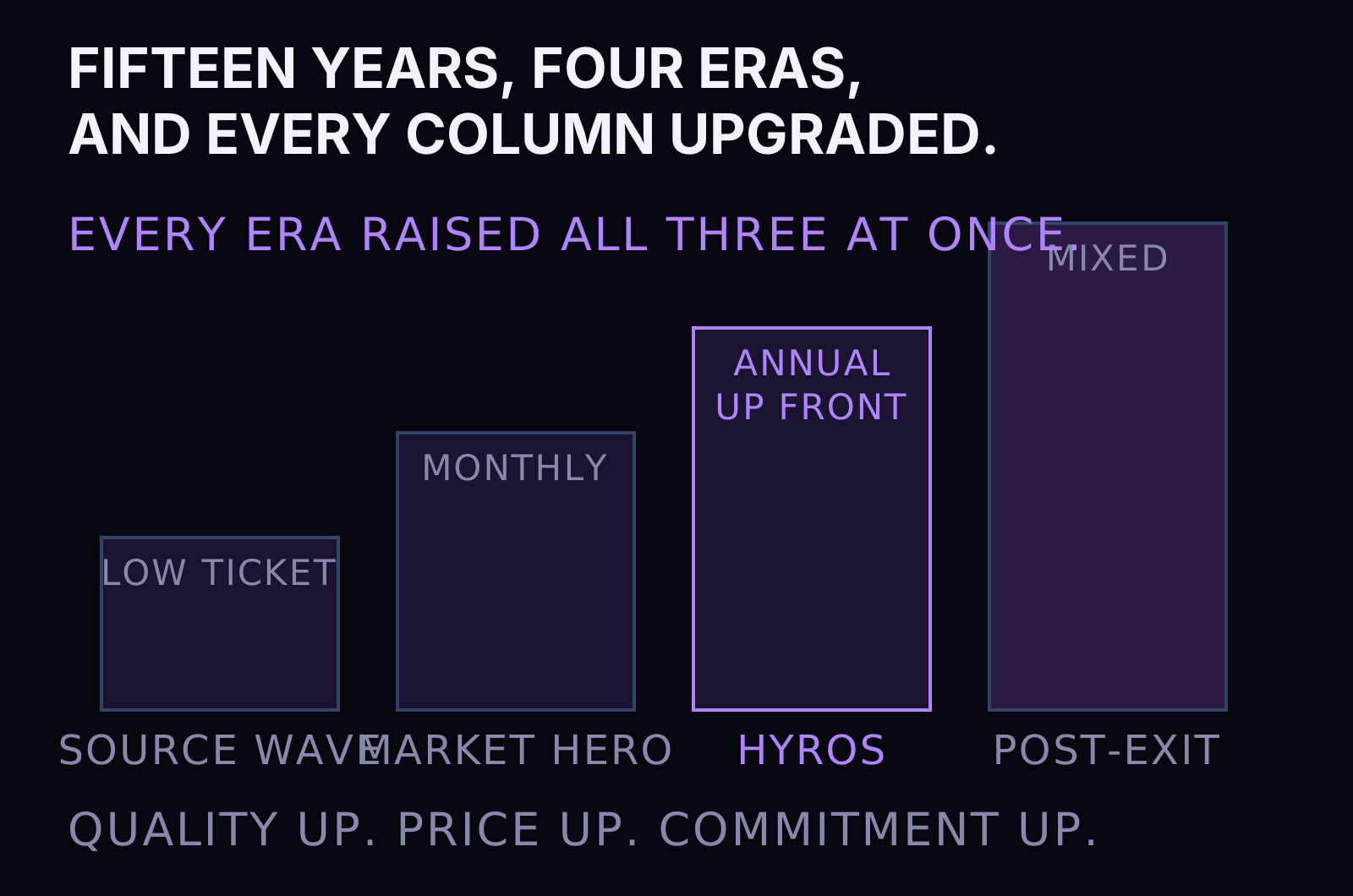
Hyros, founded 2019. This is the era the pitch comes from, and every component moved up a weight class at once. The customer moved from beginners to businesses spending real money on ads. The price moved from low-ticket to thousands per year, billed annually up front, no month-to-month option in the early days. The sales motion moved from launches to one-to-one calls. The promise moved from access to a guaranteed result: in his telling, plugging accurate tracking into a serious ad account reliably lifts ad revenue, so Hyros could guarantee the lift and refund anyone who didn't get it. And the acquisition channel moved to paid ads feeding a call funnel, which only works because the up-front annual contract makes the unit math survive expensive calls. He stopped selling courses entirely and went all in on one company.
It worked. By his own account Hyros reached $40 million in annual recurring revenue, valued north of $200 million, bootstrapped the whole way, with Becker keeping the equity. In December 2022, Banzai announced it was acquiring Hyros in a deal TechCrunch reported at $110 million, largely stock. Becker moved from CEO to chief revenue officer in 2023 per later profiles. The headline number and the realized number are not the same thing in a stock deal, and he'd be the first to tell you that. The structural point stands: a bootstrapped, guarantee-sold, annually-billed SaaS reached a nine-figure exit without a dollar of outside capital.
Era four: the audience becomes the asset
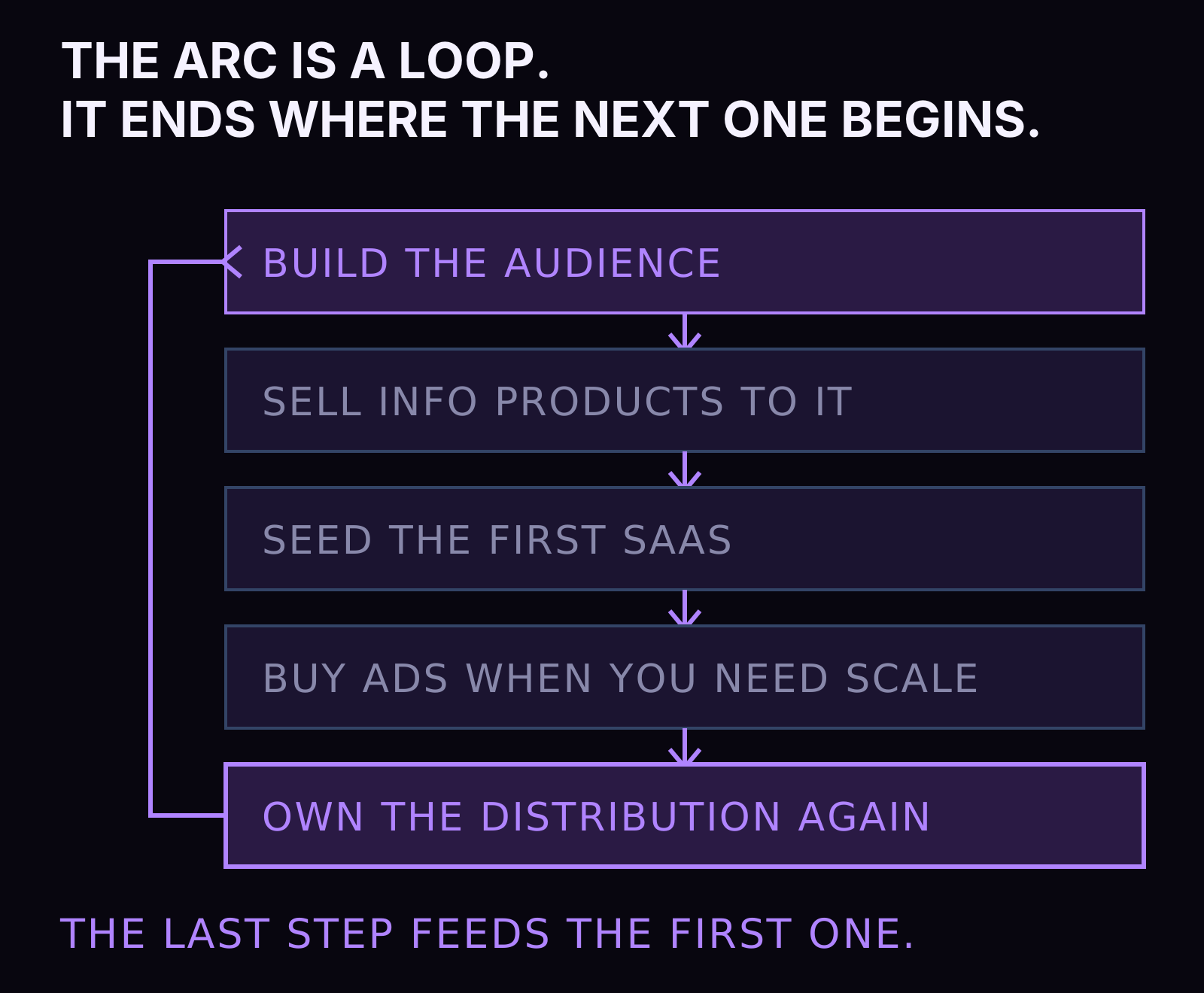
Post-exit Becker runs on distribution he owns: a YouTube channel in the millions of subscribers, gated communities, the Neo Tokyo NFT project, new AI tools attached to the Hyros brand. Notice the loop. He spent a decade building an audience to sell info products, used that audience to seed his first SaaS, went paid-ads-plus-call-funnel when he needed scale, and then came back around to audience as the cheapest possible distribution once he had real products to distribute. The arc ends where the next model begins.
| Era | What he sold | Who paid | How it was billed | How customers arrived |
|---|---|---|---|---|
| Source Wave (2011-2016) | SEO courses, software, services | Beginners, broad and price-sensitive | Low-ticket, one-time and launch cycles | Organic: YouTube, email, launches |
| Market Hero (2015-2018) | Email marketing and analytics SaaS | Marketers from his existing audience | Monthly subscription | Audience he already owned |
| Hyros (2019-2022) | Ad attribution with a guaranteed lift | Businesses with serious ad spend | Annual, up front, high-ticket | Paid ads into a one-to-one call funnel |
| Post-exit (2021-now) | Communities, tools, attention | An audience he owns outright | Mixed: assets, subscriptions, access | Content he makes himself |
Four columns, four upgrades. Customer quality went up every era. Price went up every era. Commitment went up until the guarantee made maximum commitment safe to ask for. That's the pattern worth stealing, and it's the pattern the rest of this piece is built on.
III. The mechanics, in his own words
The bootstrapping video lays the machine out piece by piece. I'm going to reassemble it here in order, because the pieces depend on each other and most people who quote Becker quote one piece and skip the load-bearing ones.
Start as an agency that has a tool
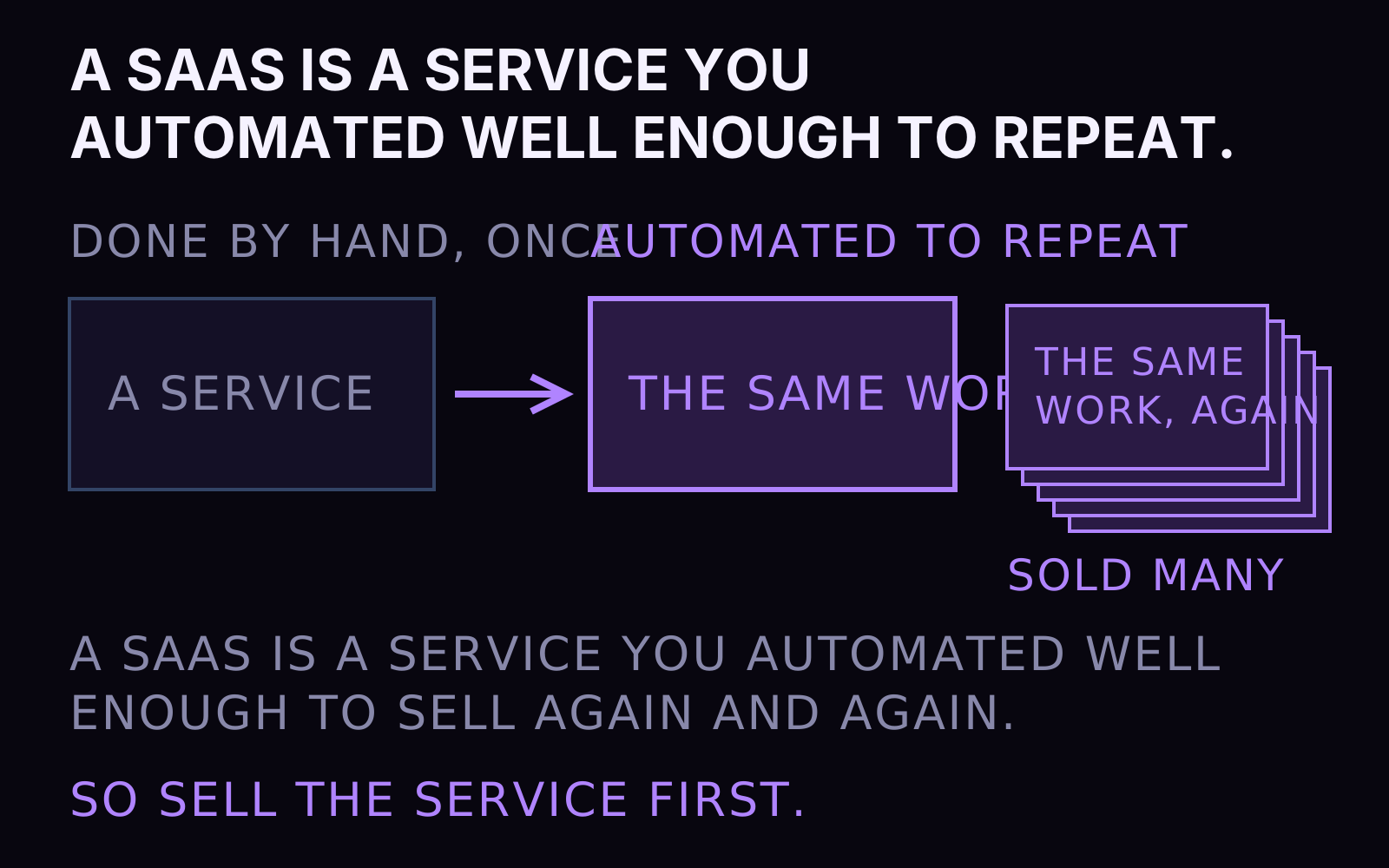
His starting position: don't launch a self-serve SaaS. Launch a service company that happens to own a tool, and run the tool for the customer. His reasoning is blunt. Your version one is janky, breaks constantly, and confuses everyone who touches it. The customer is not paying for software anyway. The customer is paying for a result, and it makes no difference to them whether that result comes from a polished app or from you manually duct-taping workflows together behind the curtain. He goes further: you can sell the service before the software exists at all, deliver the result by hand, and let the incoming cash tell you whether the software deserves to be built. Software as a service, in his framing, is just a service you eventually automated well enough to sell hundreds of times.
A SaaS is a service you automated well enough to sell hundreds of times. Becker's move: sell the service first, automate second.
Sell one-to-one, high-ticket, up front
Selling one-to-one is what makes everything else possible. You can customize the pitch to each client's exact breakage. You can charge service prices instead of software prices. And you can bill annually up front, which converts a $350-a-month subscription into thousands of dollars of cash on day one. His arithmetic: if you need $50K a month to run the company, that's ten $5K clients. Ten one-to-one closes a month is a workload two people can carry. Try assembling $50K a month from $100 subscriptions instead and you need five hundred signups you can't personally onboard, most of whom churn out of your janky v1 before month three.
He also notes, in his telling, that this is the same move HubSpot made when its numbers were mediocre on cheap monthly packages: go aggressively sales-call driven, sell the year up front, and the whole growth model started working. I'd add the qualifier that HubSpot's rise had several engines running at once, inbound content chief among them. The annual-commitment sales motion is one documented engine, and it's the one relevant here.
The guarantee is downstream of doing it for them
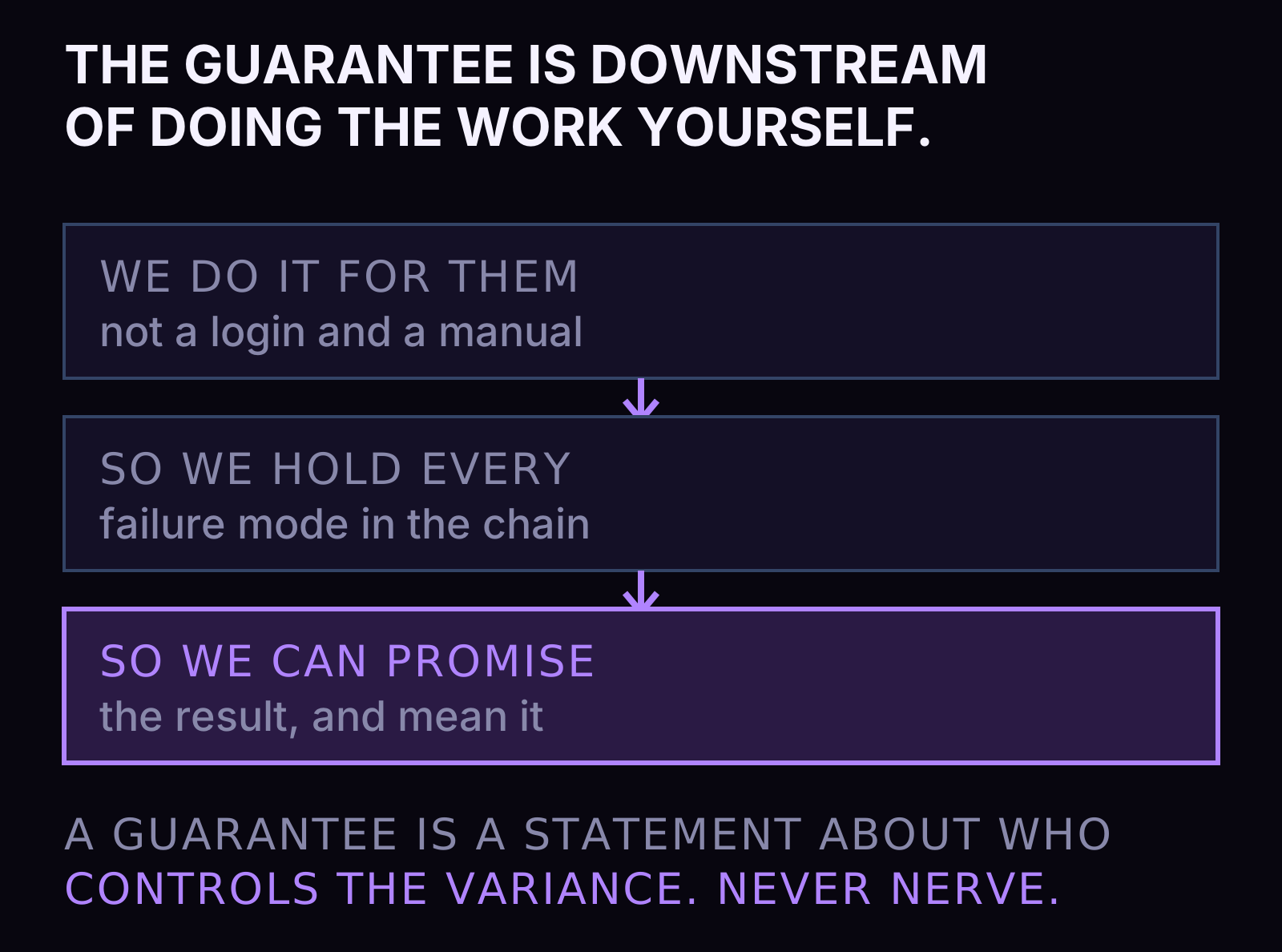
This is the part almost everyone gets backwards. A guarantee sounds like a marketing flourish you staple onto an offer. In Becker's machine it's a structural consequence: you can guarantee the result because your team personally installs, configures, and verifies the thing. White-glove delivery collapses the variance. When your own people run the setup, the failure modes you're insuring against are failure modes you control. His one-liner on the objection is crude and correct: if you can't guarantee your product consistently works, the problem is the product, and no offer structure fixes that.
And the guarantee is what lets you keep the money. His phrasing is that bootstrapping dies if nobody lets you keep their money. The refund promise is what makes a five-figure up-front invoice feel safe to sign. The commitment framing is what makes the invoice feel fair: we're putting a team on your account, so we need to know you're committed. Risk reversal and commitment escalation, welded into one sentence, each justifying the other.
The ad math only works up front
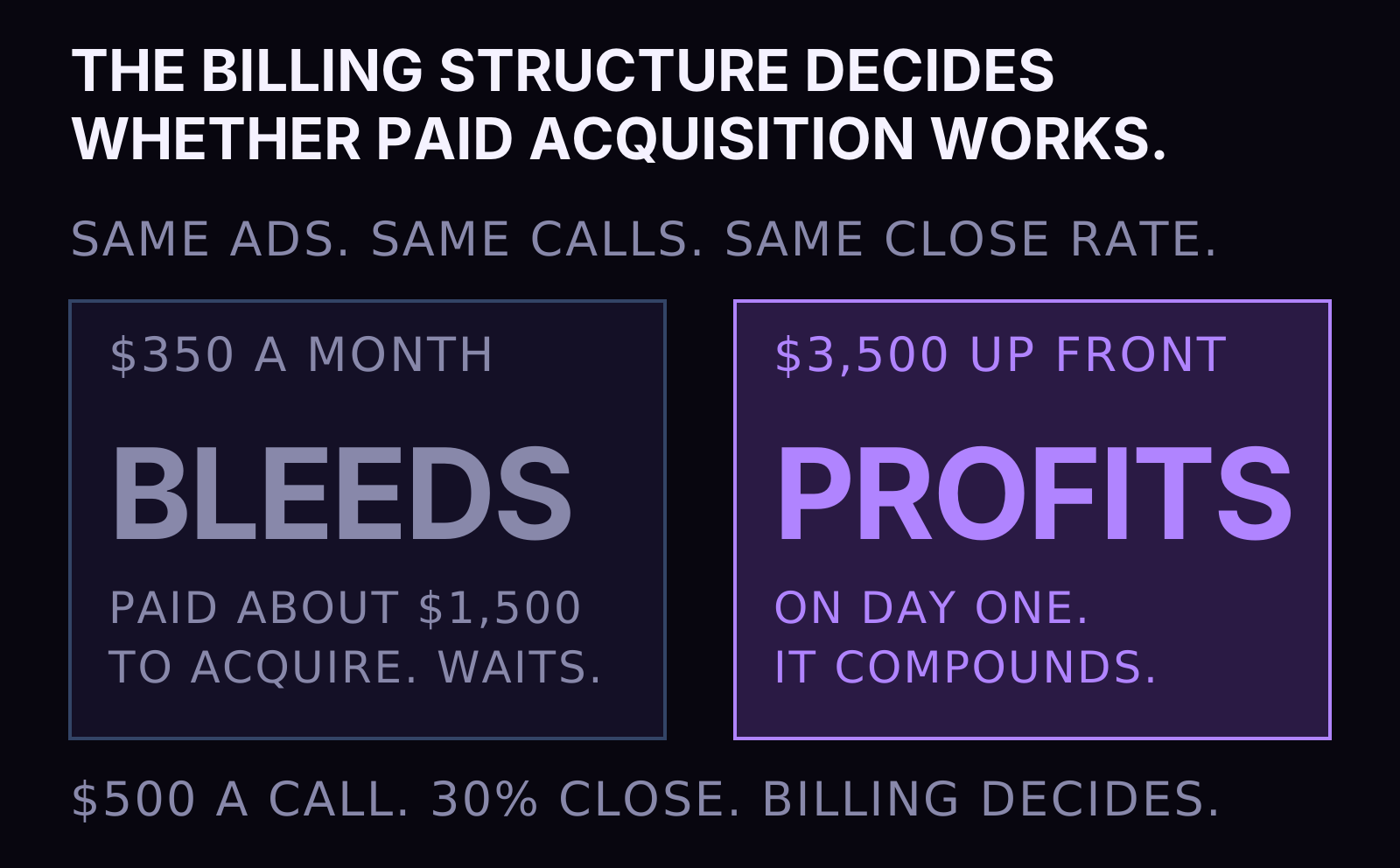
Becker's numbers from running Hyros: a booked sales call costs around $500 in ad spend, and about 30% of calls close. At those rates a $350-a-month subscription is a slow bleed; you paid roughly $1,500 to acquire a customer who pays you back over months and might churn first. The same funnel selling a $3,500 annual package up front is profitable on day one. Same ads, same calls, same close rate. The billing structure alone decides whether paid acquisition compounds or bleeds, which makes annual-up-front a growth decision before it's a pricing decision.
The enterprise version: $100M businesses, $1M problems
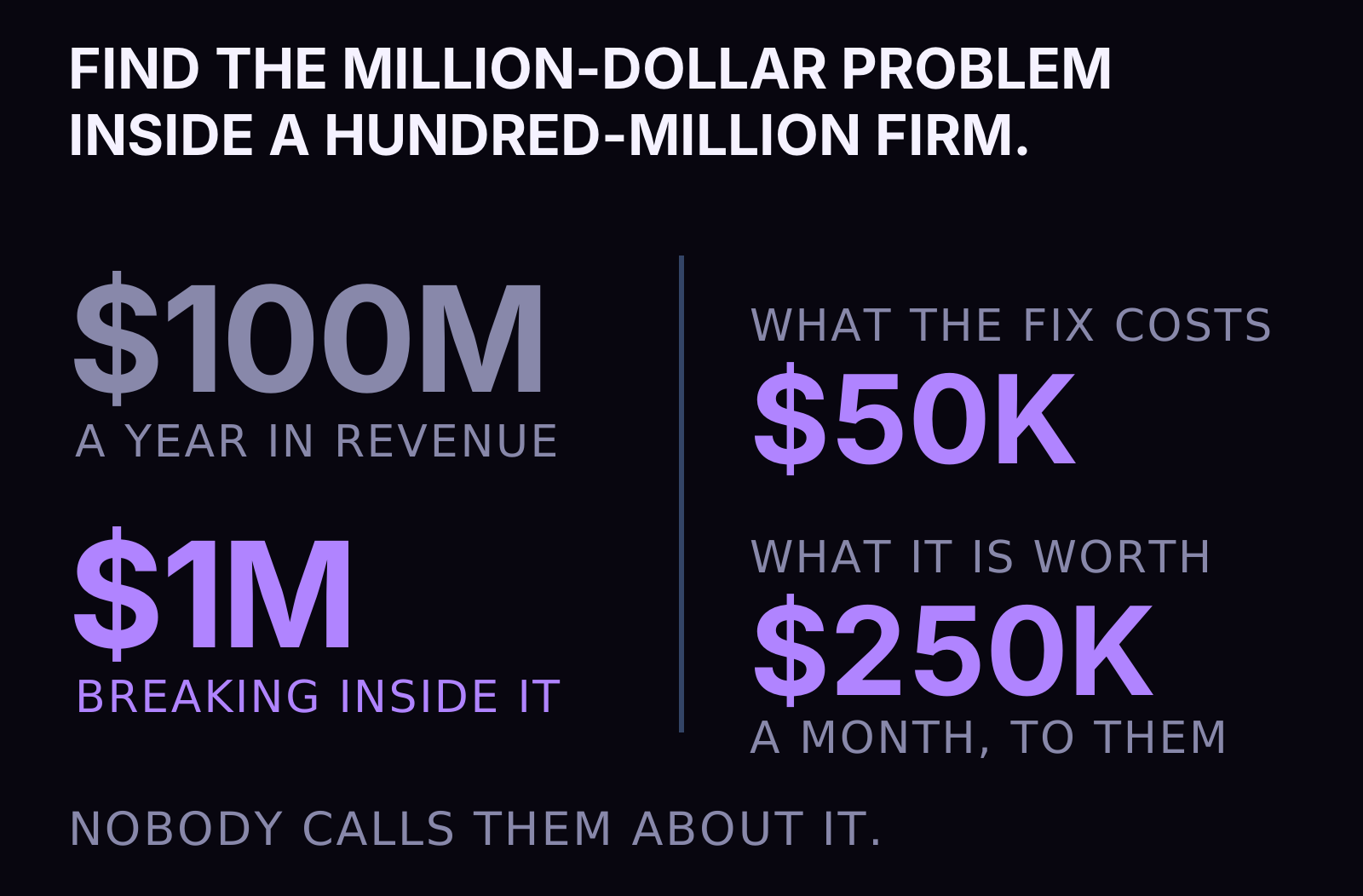
Then he raises the ceiling. The best version of this whole model, in his words, is enterprise: find businesses making $100 million a year, find something inside them that's breaking, something losing them a million a year or capable of making them a million a year, and fix it with a custom software solution nobody else is offering. Everyone is cold-calling those companies to sell them ads and agency retainers. Almost nobody calls offering to fix a specific broken thing in their logistics or tracking with purpose-built software. A company at that scale pays $50K up front without blinking for a fix worth $250K a month to them. He points at Harvey, the legal AI company that went straight at the biggest law firms in America, as the shape of it.
Hold that paragraph in your head. It matters in section four, because it is, nearly word for word, the opening move of my framework.
Cash flow the small things into the big swing
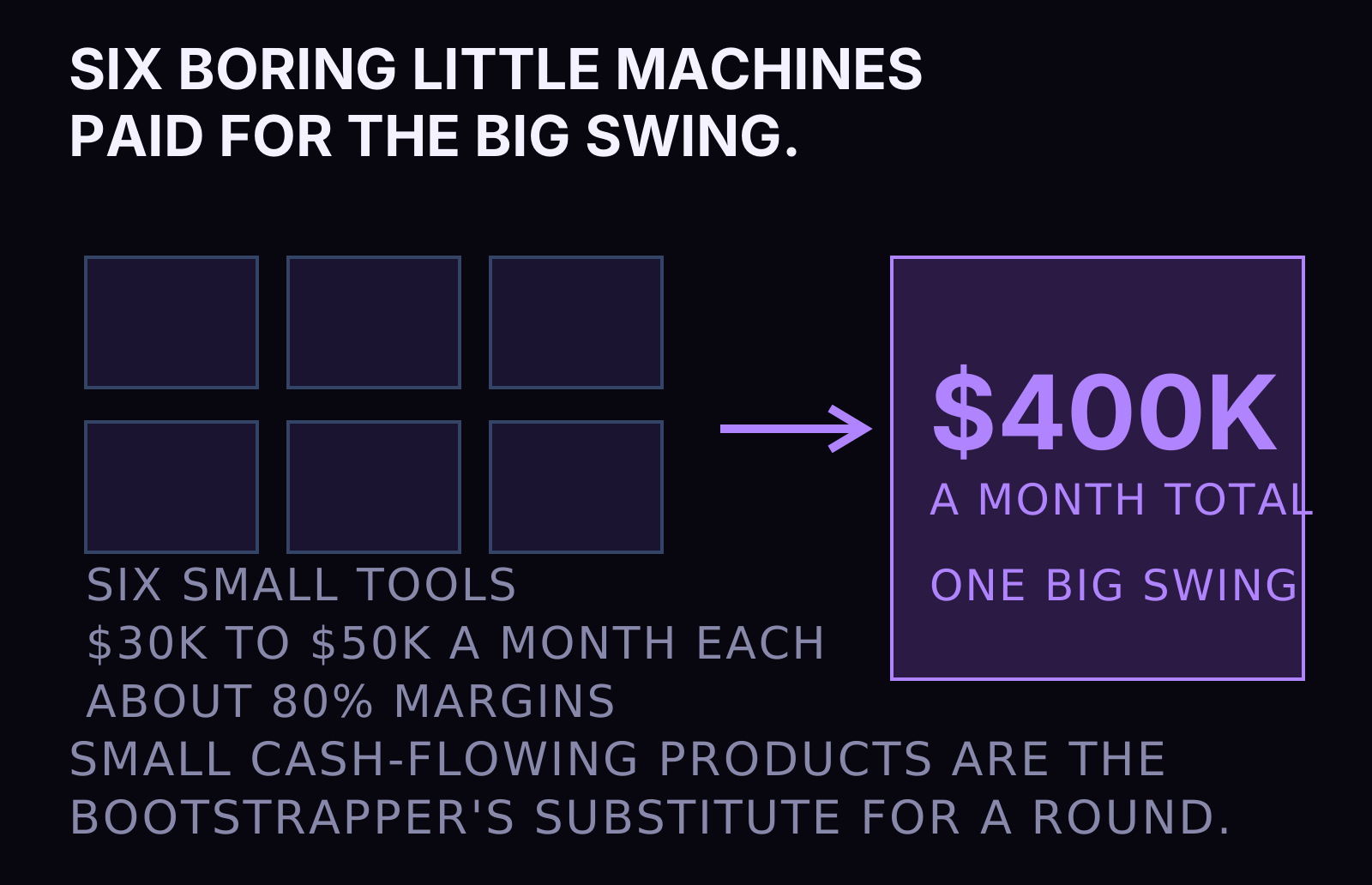
Before Hyros, Becker ran a portfolio of what he calls mini-SaaS: six small tools doing $30K to $50K a month each at roughly 80% margins, about $400K a month combined. Those boring little machines funded Hyros, the big swing. He's open that the portfolio was messy and that he'd structure it differently today, fewer products, more one-to-one clients per product. The principle survives the mess: small, high-margin, cash-flowing products are the bootstrapper's substitute for a funding round.
Then stop taking the cash
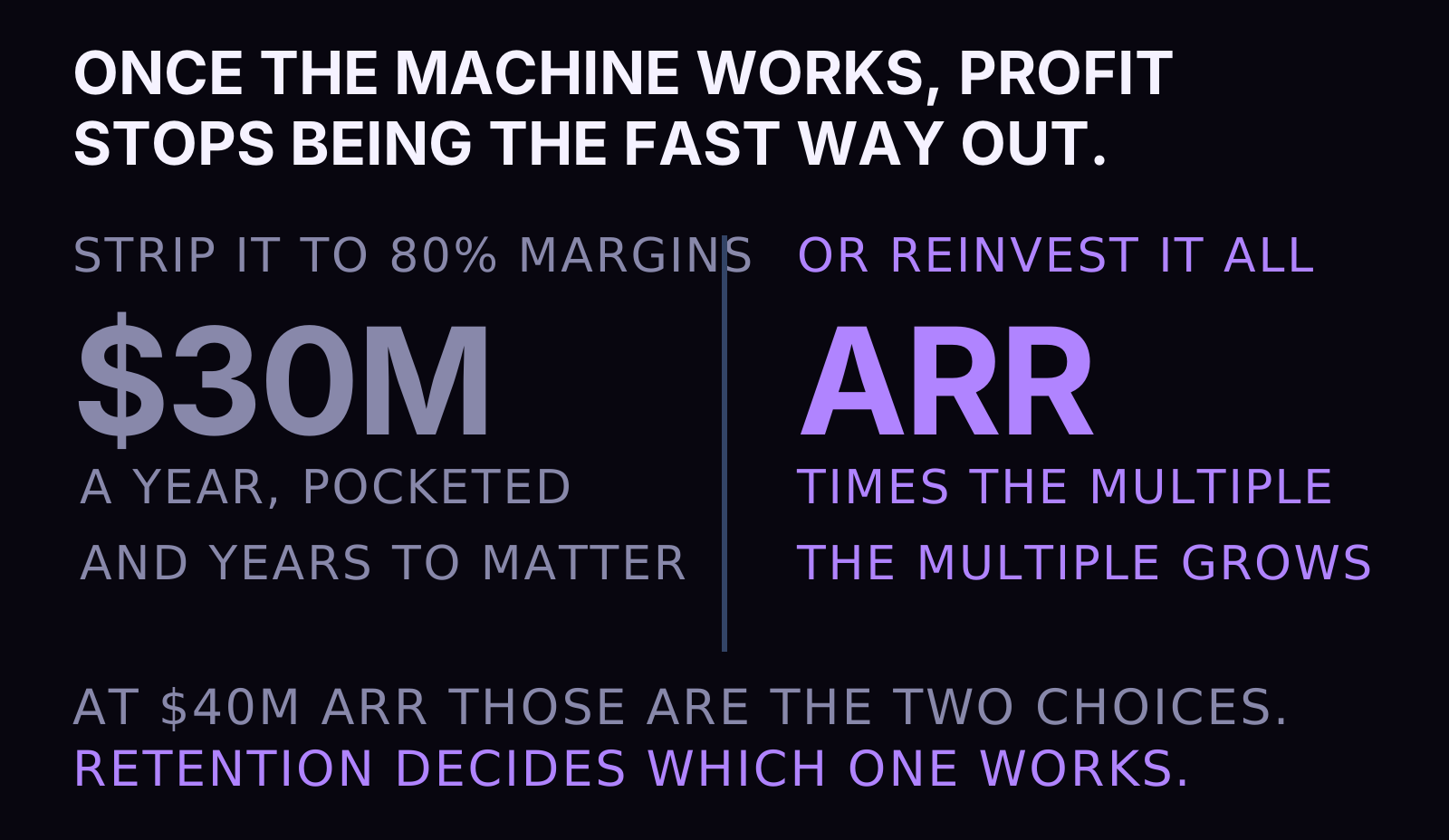
The last gear shift in the video is the one that separates operators from owners. Once the machine works, the fastest way to get rich stops being profit extraction and becomes equity growth. His own worked example: at $40M ARR he could strip Hyros to 80% margins and pocket $30M a year, and it would take years to matter. Or he reinvests everything, grows ARR, and the valuation multiple does the work, because software multiples expand with scale and low churn. Every dollar of durable ARR is worth several dollars of enterprise value. Which makes retention the entire game: his claim is that if your customers stay and each one refers another, you can be mediocre at everything else and still win, and that by year two or three the majority of a healthy SaaS company's sales should be organic. The guarantee, the white-glove delivery, the one-to-one attention: all of it feeds retention, and retention feeds the multiple.
IV. The Value Optimization Framework
Now my framework. Becker's machine is the proof that these mechanics compound. The Value Optimization Framework takes the same mechanics and points them at a bigger structure: many sectors, aggregated expertise, and a content engine Becker himself never wanted to run. Here it is in one paragraph, then move by move.
Study $100M business models until you understand them intimately. Find the million-dollar problems inside them. Fix those problems and charge multiple-five to low-six figures for the fix, wrapped in a guarantee and a content strategy built from the target audience's own world. Deliver through a SaaS-and-Service bundle organization that gets it done at scale, funded by a bootstrap flywheel instead of a cap table. Aggregate other professionals under the operation, layer my own experience on top, and the combined output becomes content nobody else can make. Run that across many sectors and the whole thing becomes a force multiplier of influence, operating on standard terms at global scale across the most valuable communities.
Move one: study the $100M model until you know it cold
The framework starts with study, and the choice of target is the whole edge. A business doing $100 million a year has already proven its demand, survived its own scaling mistakes, and built processes big enough that a one-percent inefficiency is a seven-figure line item. You don't guess at what such a business needs. You study the model the way an analyst studies a balance sheet: where the money enters, where it compounds, where it silently leaks. My training for this was watching web3 tokenomics up close, dozens of real-time financial-engineering social experiments where market value moved at the scale of billions and you could watch incentive design succeed or fail in public, in hours instead of quarters. That education transfers. Business models are incentive systems with slower feedback loops.
Move two: find the million-dollar problem
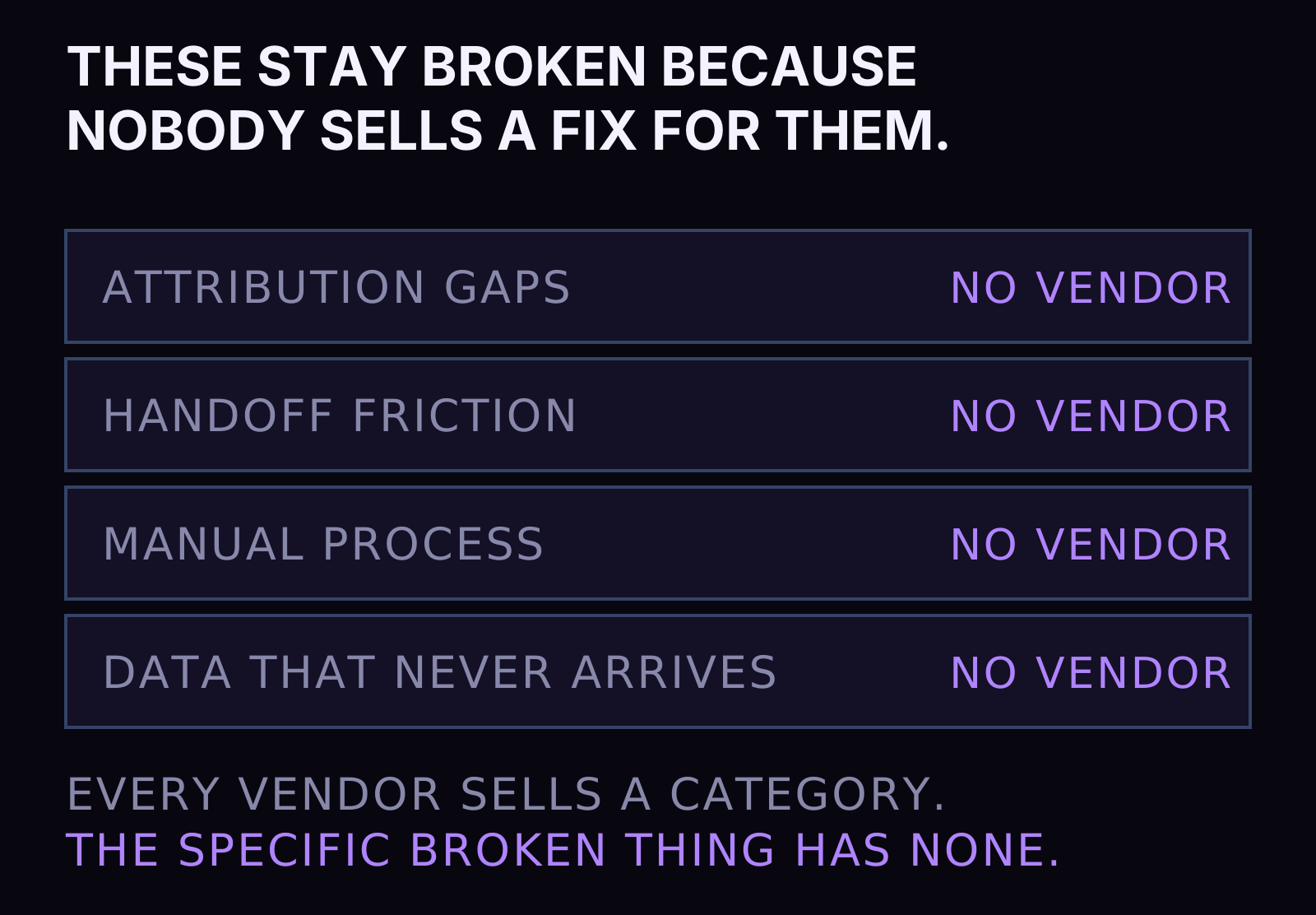
This is where Becker and I converge almost word for word, and I didn't get it from him, which is exactly why his version matters to me. Independent derivation is the strongest external validation there is. Inside every $100M business there are problems worth a million a year that nobody internal owns: attribution gaps, handoff friction between departments, manual processes that everyone assumes are the cost of doing business, data that exists but never reaches the decision it should inform. They stay unfixed because the vendors calling that company are all selling generic categories, ads, consulting hours, seats of software built for someone else. The specific broken thing has no vendor, so it has no fix.
Inside every $100M business sit million-dollar problems with no vendor. The specific broken thing has no category, so it has no fix.
Move three: fix it, guarantee it, price it like a result
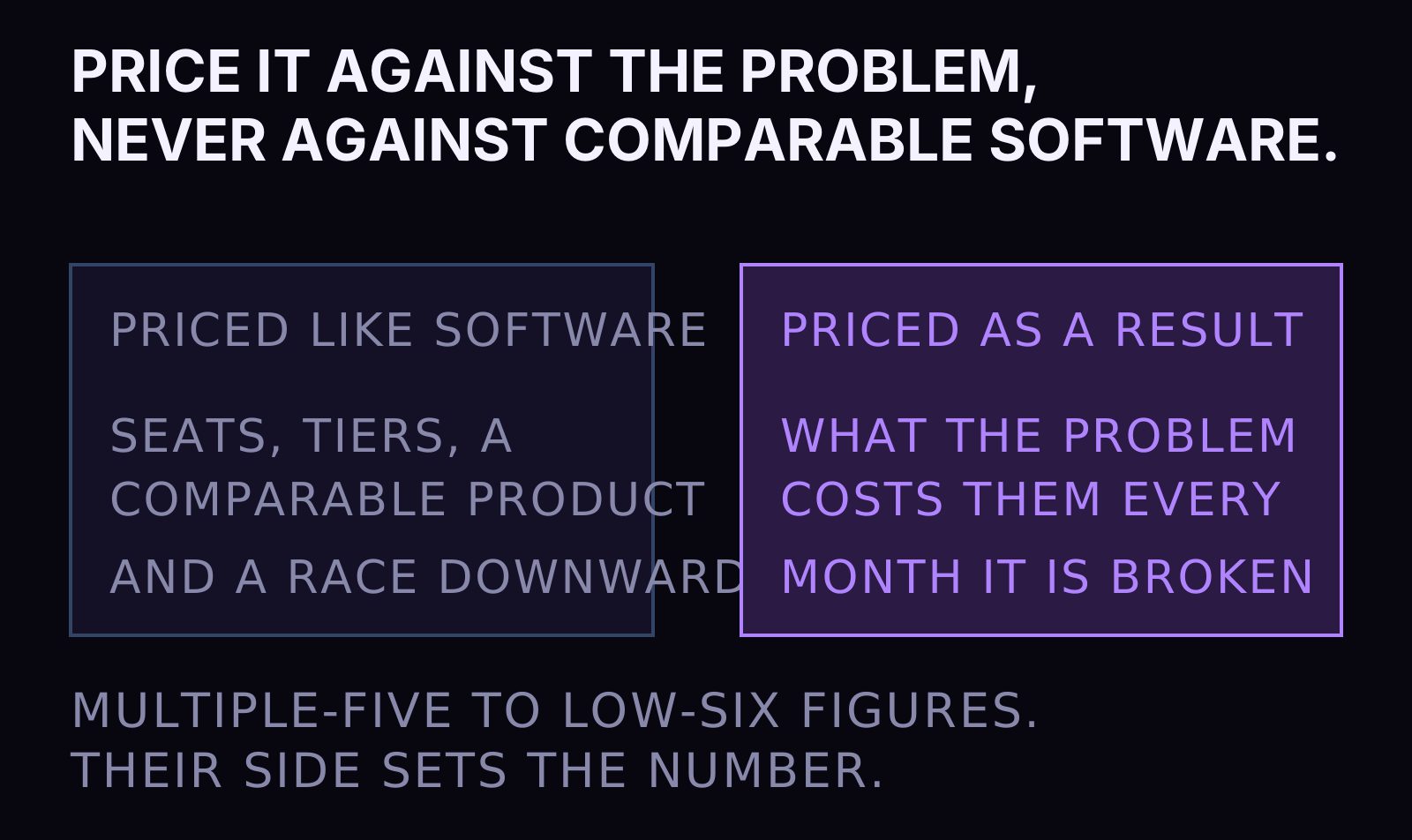
The fix sells for multiple-five to low-six figures because it's priced against the problem, never against comparable software. And it carries Becker's two doors, which I've adopted wholesale because I watched the logic hold across his entire arc. Door one: our team sets it up, walks you through it, guarantees the result, and makes sure it works, so we bill a year up front to cover the cost and confirm you're committed. If it doesn't work, full refund. Door two: take the free offer, get a small result on your own, and commit after the result is real. Both doors put the risk on us, and putting the risk on us is only rational because delivery is done for the client by people who control every failure mode. A guarantee like that is a statement about who controls the variance, never a display of nerve.
Move four: the SaaS-and-Service bundle is permanent, not a phase
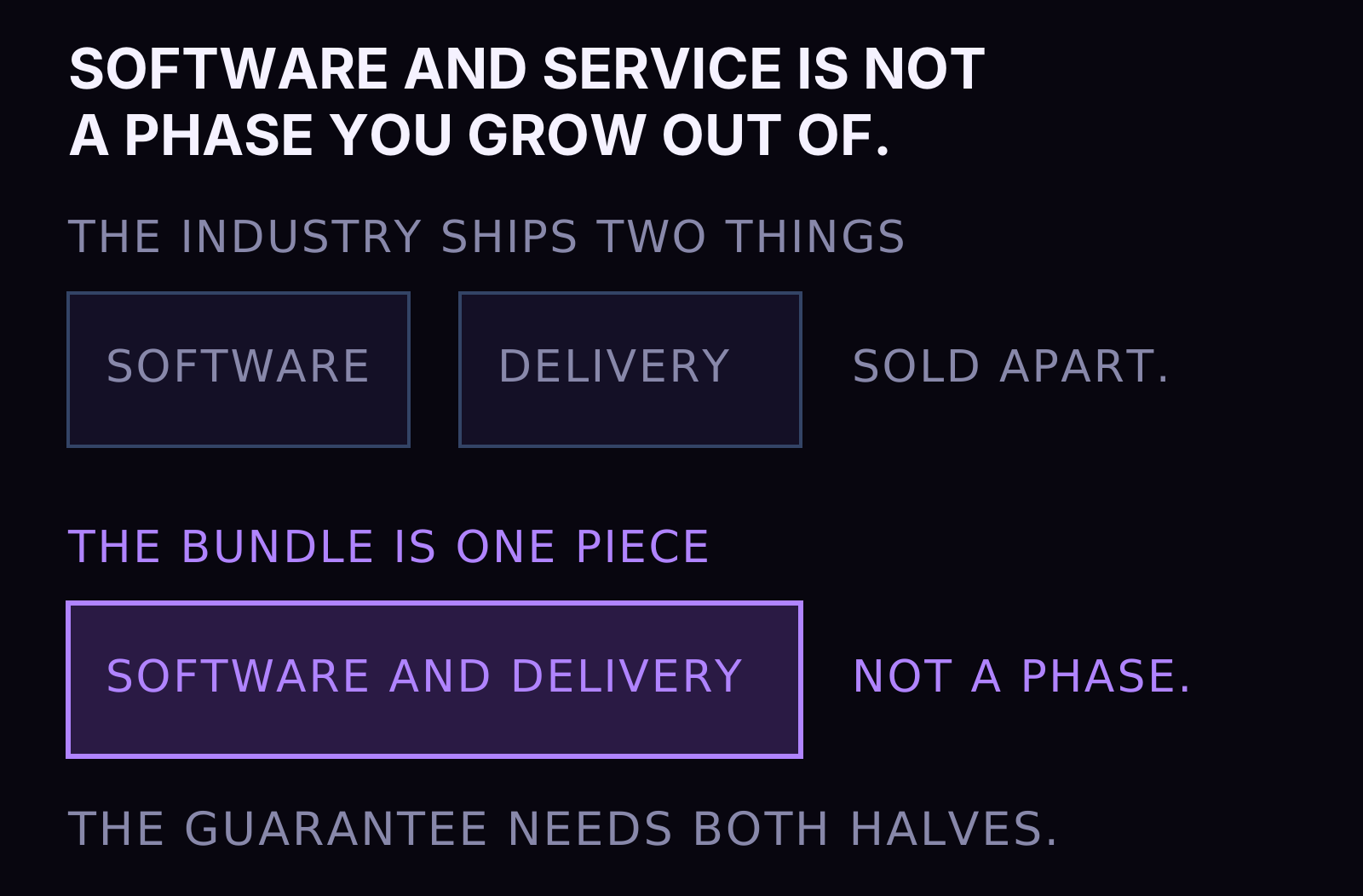
Here's my first real divergence from Becker. In his model, the agency-with-a-tool stage is scaffolding: you do it for the customer until the software matures, then the service withers away and pure SaaS remains. In the Value Optimization Framework, the bundle is the product forever. Software plus the team that operates it, sold as one unit. The reason is what's happening to the cost of the service half. Agentic infrastructure keeps collapsing the marginal cost of expert-level service delivery, which means the bundle holds white-glove quality at software-adjacent margins. Becker had to retire the service layer because humans made it expensive. I get to keep it, because increasingly it's humans directing agents, and the service layer is exactly where the guarantee lives.
Move five: the bootstrap flywheel
No raised capital, same as Becker, and for his stated reason: cash flow first and keep the equity. Guaranteed engagements billed up front fund the productization of whatever the engagements teach us. Each productized fix lowers the delivery cost of the next engagement, which widens margin, which funds the next build. The annual-up-front structure is what primes the wheel; the mini-portfolio logic, many small cash-flowing fixes rather than one bet-the-company product, is what keeps it spinning. This is his mini-SaaS portfolio and his big swing, run as one continuous loop instead of two separate life phases.
Move six: aggregate professionals, then layer
A single operator caps out fast, and this is where the framework leaves Becker's solo-founder shape entirely. The organization aggregates other professionals, domain experts in each sector we enter, and layers my own experience and systems on top of theirs. The layering is the point. An expert alone produces expertise. An expert running on shared infrastructure, shared guarantee mechanics, and a shared content engine produces impact that neither the expert nor the infrastructure produces alone, and that combined output is the raw material for content nobody else can make: real operators, real fixes, real numbers, told from inside. That uniqueness is what makes the content engaging enough to travel on its own.
Move seven: many sectors, one force multiplier
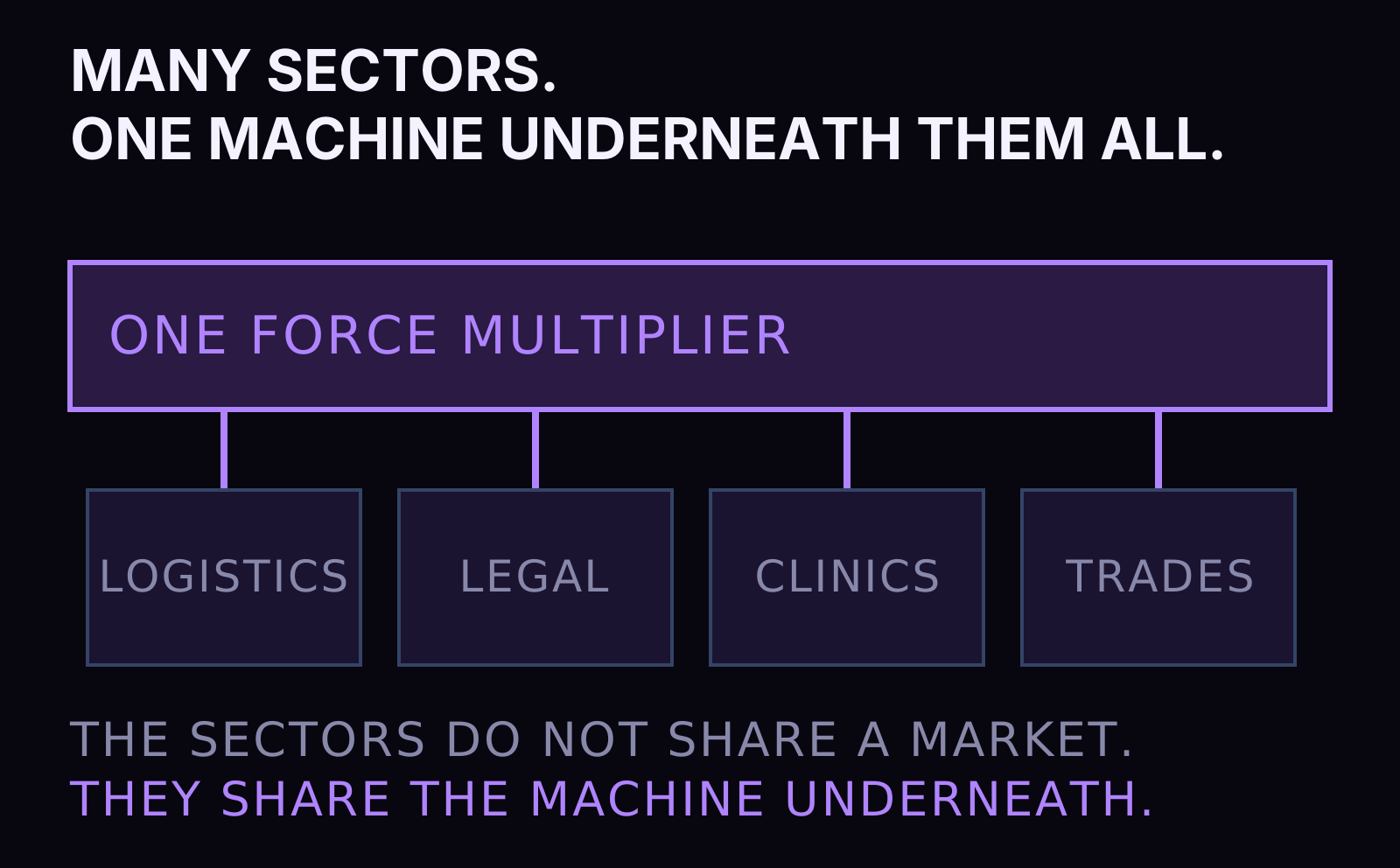
Run moves one through six in one sector and you have a strong firm. Run them across many sectors and the effects start multiplying instead of adding: every sector's engagements feed the shared playbook, every sector's wins feed the shared proof library, every sector's audience compounds the shared reach. At that scale the model operates the way any mature platform does, on standard terms and conditions, globally, across the most valuable communities in each domain, at a pace the organization can sustain. Influence built this way is a byproduct of delivered results, which is the only kind that survives contact with a skeptical operator audience.
V. The distribution stack Becker refused to build
Becker says something near the end of the bootstrapping video that most viewers skate past. He doesn't like content as a growth strategy. He's been making content for 15 years, admits it works, points at companies that built a media arm and attached a SaaS to it, and still calls it icing rather than cake, because content is hard and a first-time founder shouldn't also be trying to become an influencer. Fair advice for his audience. And then look at his own life: the info-era audience seeded Market Hero, the YouTube channel compounds everything he launches, and his post-exit model is almost entirely audience-powered. He rejected content as a strategy while content quietly became his most durable asset. I'm taking the hint his arc gives rather than the advice his video gives.
The open-source release cycle
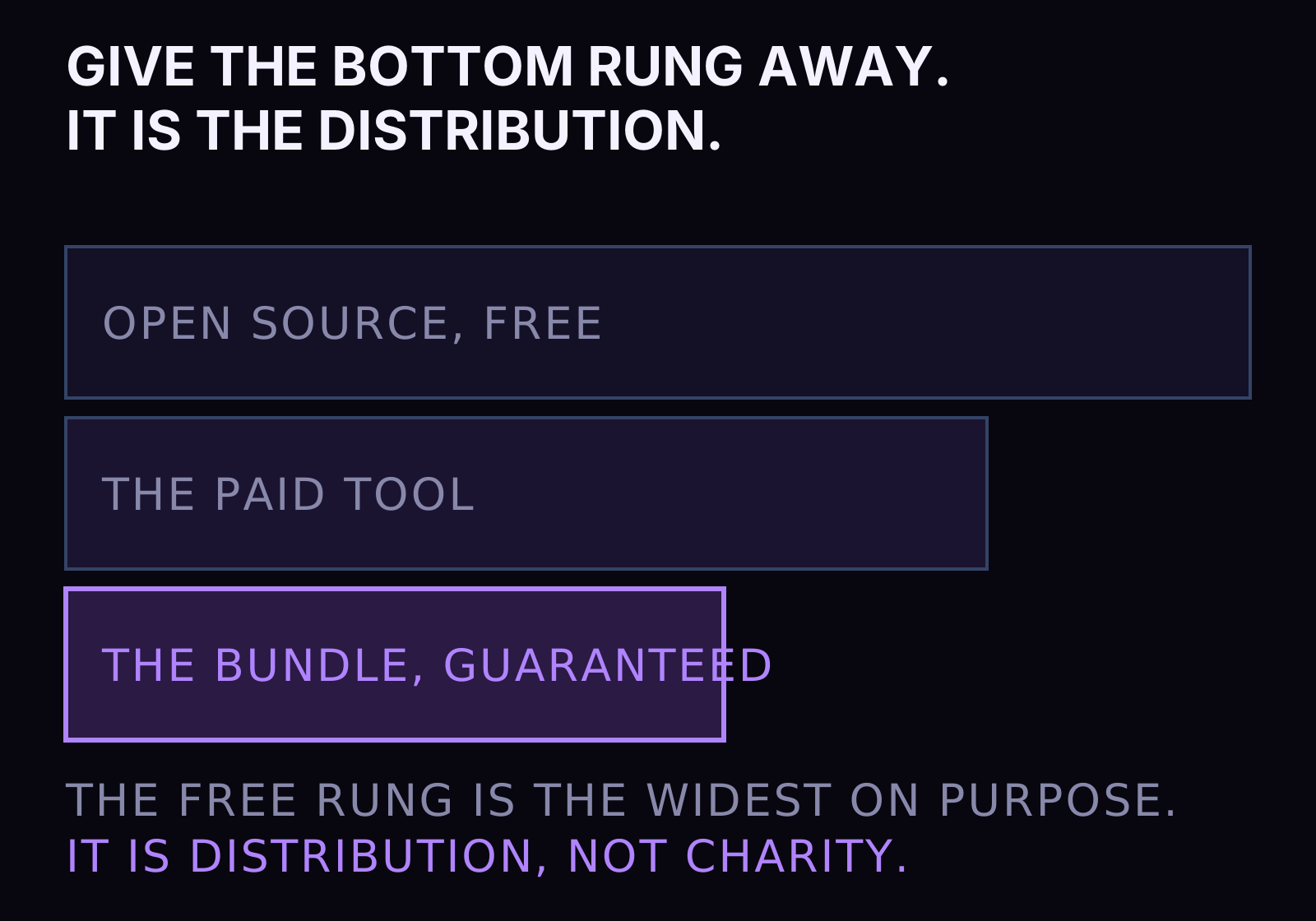
So the framework builds the media arm on purpose, and the spine of it is an open-source publishing rhythm. Every extended chapter of work, quarterly or annual, gets distilled into a major release: the playbooks, the tooling patterns, the lessons from real engagements, shipped openly at minimum as an extensive education source, usually driven by 3D animations and interactive experiences rather than blog posts, because the production bar is itself the proof of capability. Open-sourcing the learnings costs almost nothing, since the value was never the information. The value is the operating organization that executes it with a guarantee. The releases do the aggregating: they pull in exactly the professionals and operators the framework wants to attract, pre-sold by the work itself.
The value ladder above it
Above the free layer sits a standard ladder, each rung a tighter room with more access: a Skool community at the base, a private community above it, VIP programs, coaching, and upward from there. The design goal for the ladder is evolutionary and symbiotic scale. Every rung has to feed the rungs around it: the free releases fill the community, the community surfaces the operators worth aggregating, the aggregated operators improve the engagements, the engagements produce the next release. Becker's own value insight applies here too: the guarantee logic doesn't stop at software. Whatever the rung, the buyer commits harder when the seller carries the risk.
Why the window is open right now
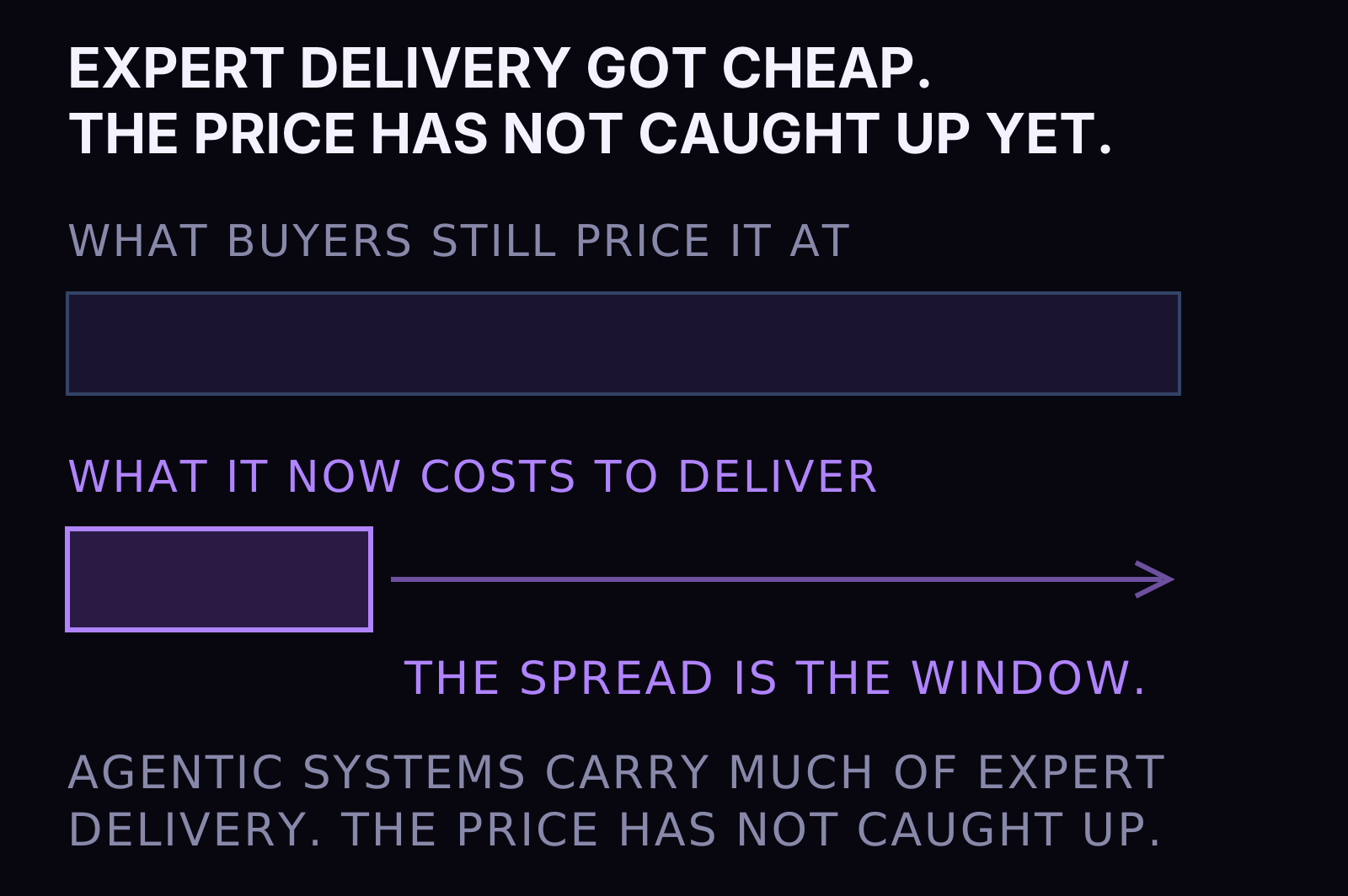
None of this would be worth writing down if it were timeless. It's timed. Human-agent hybrid enterprise infrastructure is briefly mispriced: agentic systems can now carry a large share of expert service delivery, and most incumbent service firms haven't restructured around that, while most software firms won't touch delivery at all. That imbalance is the arbitrage the whole framework leans on. The service half of the bundle costs a fraction of what buyers still assume it costs, which is what makes guaranteed white-glove delivery at scale economically sane for the first time. Windows like this close. Becker's arc took 15 years partly because each era's tooling had to exist before he could use it. The tooling for this model exists now, all at once.

VI. What the arc actually teaches
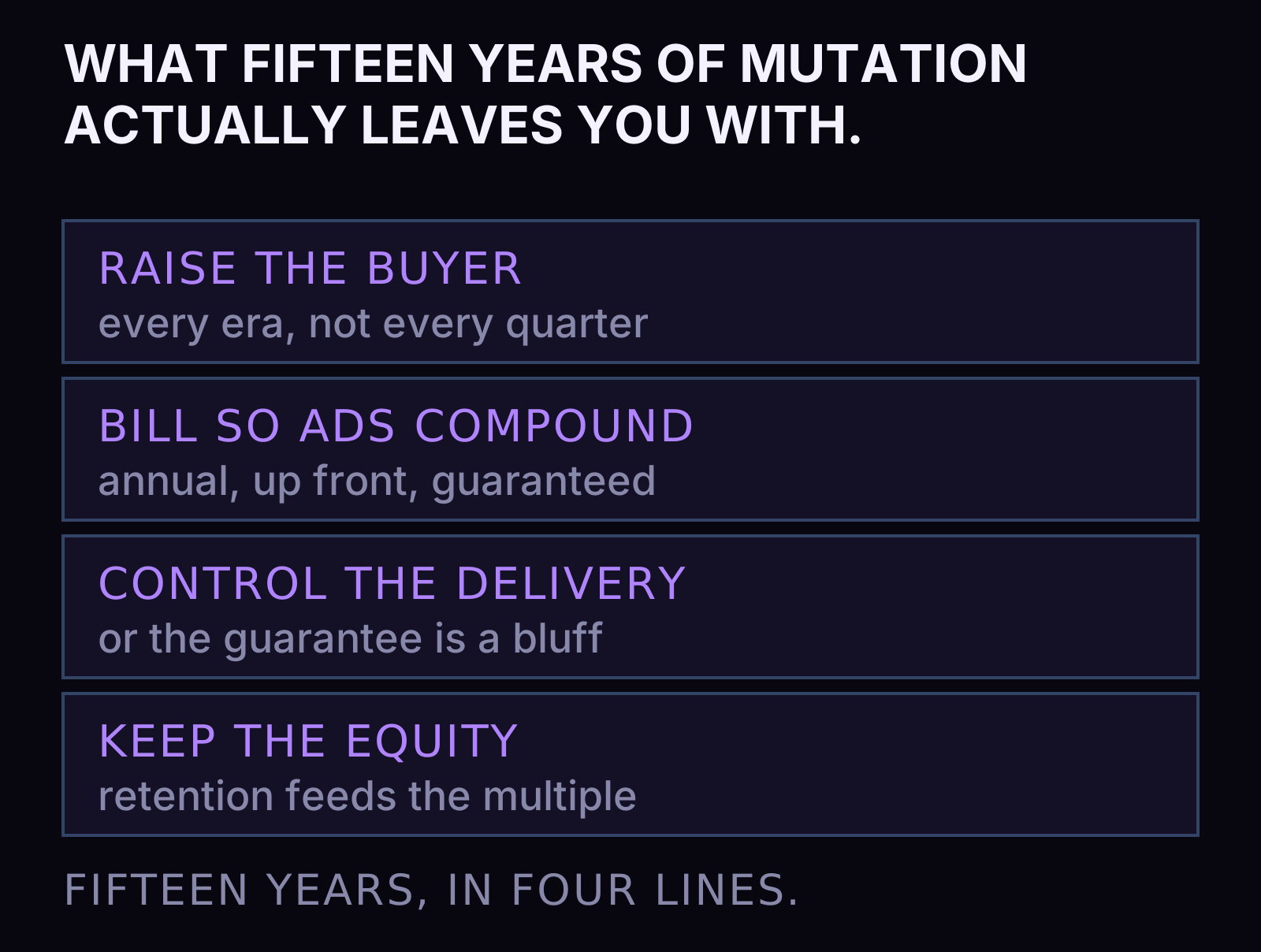
Compress Becker's 15 years into one sentence and you get: move the customer up, move the price up, move the commitment up, and make each move safe with a guarantee you can honor because you control delivery. Then convert cash-flow thinking into equity thinking and let retention drive the multiple. Every era of his that ended, ended because the model outgrew its own container: info products outgrew the beginner audience, Market Hero outgrew email, the service layer outgrew human delivery costs. The Value Optimization Framework is what I get when I build the container those forces were pushing toward the whole time: guaranteed outcomes for businesses big enough that the outcomes are worth six figures, delivered by a hybrid organization whose service layer no longer has to wither, financed by its own invoices, and distributed by an open education engine his generation of founders treated as optional.
If you run a business under a few million a year, this framework is built to study you, never to sell to you; the free layer is where you'll get your value, and I'd genuinely point you there. If you're an operator inside a $100M business staring at a broken thing everyone's stopped seeing, you're the exact reader this was written for. And if you want a discount instead of a guarantee, I'm probably not the guy for you.
Sources: Alex Becker's bootstrapping-SaaS video (the pitch, the ad math, the mini-SaaS portfolio, the equity math, and the $100M-business enterprise play are all from his own telling there). TechCrunch's December 2022 report on Banzai's announced $110M acquisition of Hyros. Public profiles and reviews documenting the Source Wave, Market Hero, and Hyros eras and the 90-day money-back guarantee Hyros advertises today. Where a figure is Becker's own claim rather than independently audited, I've attributed it to his telling in the text.